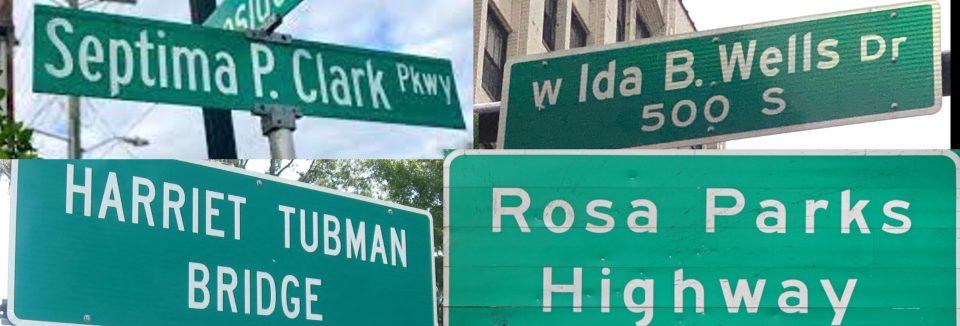
Place Naming and Social/Spatial Justice
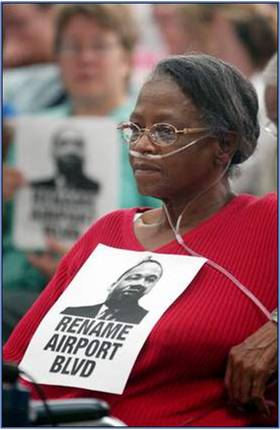
MLK Street Name Debate, Melbourne FL
While the study of streets named for Martin Luther King, Jr. has long interested me, my current work seeks to create a closer dialogue between the study of place naming and issues of social and spatial justice and African American belonging. Often, the politics of street naming is not just about honoring King, but it is also about publicly recognzing the importance and legitimacy of all African-Americans. Specifically, I focus on how the struggle to name roads for King is part of a broader fight for public space in American cities and the rights of African American to have a voice in how they are remembered and represented within the larger city text. I conceptualize King streets as not only monuments to the Civil Rights Movement but also extensions of the ongoing struggle for civil rights. I am particularly interested in understanding the obstacles that face street naming proponents and challenging what I perceive as unfair public policies and city ordinances that seek to limit the cultural expressions of African Americans. As I am discovering, commemorating King along the nation’s roadways exposes the continuing importance of traditional racial and economic boundaries and borders in communities, the elite, property-based interests that often direct city planning and development, the unwillingness of government officials to openly engage issues of race nad racism, and the legacy of transportation and environmental racism as it affects communities of color. I am especially interested in making my research findings and perspectives available to public leaders, managers, planners, and activists as they seek to construct community strategies for dealing with the politics of honoring King with a street name.
Civil Rights & Antiracism in Geographic Education
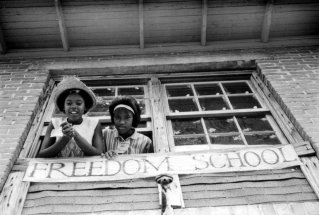
Responding to rising social tensions within American public education and often a neglect of pedagogy with ongoing theoretical and political debates in human geography, I am working alone and in teams with colleagues to advocate for greater operationalizing of antiracism pedagogies within geography classrooms–both K-12 and in higher education. Such pedagogies undermine long-standing geographic knowledge systems that marginalize and misrepresent people of color while also distorting and misinforming the worldviews of a White society. My work has sought to create publications, curricular materials and training opportunities to help educators bring greater discussions of the Civil rights Movement and social/spatial justice principles more generally into teaching and to form classrooms into workspaces for studying and challenging inequality . In doing so, this new educational work is fully realized by not just adding these themes to traditional conceptions and themes in geography education; rather, it requires a fundamental rethinking of space, place through an antiracist lens. Another dimension of this critical pedagogy is that it requires an understanding of the geographic education that activist communities and institutions such as freedom and citizenship schools have always created and used in carrying out a long history of fugitive learning. Development of a robust geography education agenda centered around DEI is crucially needed in light of ongoing bans on such instruction.
Podcast summary of “Rethinking the Pedagogy of the Montgomery Bus Boycott”
The Politics of Remembering Slavery in the American South: A Tale of Symbolic Annihilation, Symbolic Excavation, and Commemorative Surrogation

Slavery memorial, Savannah, GA

Walterboro, SC
Traditionally, historic sites in the American South have not engaged visitors in critical discussions of slavery. Some scholars have used the term “symbolic annihilation” to capture the manner in which these sites have failed to represent the identities and histories of the enslaved as they valorize the accomplishments and worldviews of whites. Yet, there are early indications that this pattern has begun to change as tourists seek out and are offered fuller and sometimes traumatic representations of African American history. In understanding how slave histories are resurrected and written into memorials, museums, and other public places of memory, it is perhaps useful to think about it as a process of “symbolic excavation.” The metaphor of excavation also prompts us to realize that the unearthing of difficult and long suppressed (and repressed) historical narratives can only happen through memory work, the active recovery and representation of the past. The reconstruction of the past, especially the painful memories of slavery, can also be understood as a process of commemorative surrogation–which requires the identification of a surrogate or signifer for the memory of the enslaved. My work in this area attempts to identify the process and politics by which people annihilate, excavate, and find suurogates for the histories of enslavement, both in terms of representation, narration, and bodily performance of the memory of slavery and the identity of African Americans.
Mobility as a Civil Right: Role of Transportation and Tourism within the Historical Geography of African Americans
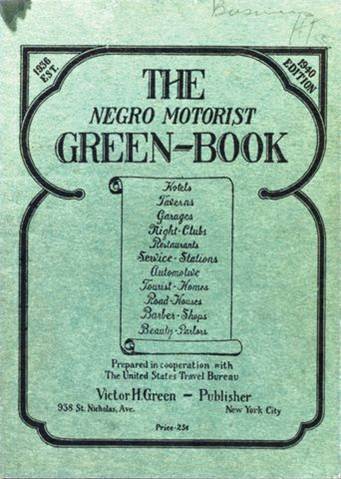
Cover of Green Book, 1949

Wendell Scott
I am increasingly interested in the role of mobility, travel, and transportation in the African American struggle for social justice. The United States experience speaks to the role of white supremacy in controlling and constraining African American mobility during slavery and the post-emancipation era. The while also demonstrating the capacity of communities of color to construct counter-mobilities that were decidely anti-racist in nature, such as the Great Migration to the North and West and civil rights campaigns such as the Montgomery Bus Boycott and the Freedom Riders. At the same time, a transportation injustice continues to place obstacles in front of black travel and movement. The idea is that movement is not simply about getting from point A to B but part of the larger emotional and political experience of the country’s black population and a key tactic and civil right in the struggle for equality. While the construction of alternative, if not insurgent, means of mobility was an important part of formal civil rights protests, the Negro Travelers’ Green Book–a Jim Crow era travel guide–illustrates the everyday context of these counter mobilities and how the ability to safely move about and access the US economic landscape was also seen as essential to challenging white supremacy and the rise of the African American citizen-consumer. My current work seeks to map and analyze the Green Book to understand the racialization of mobility in America’s historical geography and use the archival resource as a platform for collecting Jim Crow journey stories from African Americans. I have also written about the mobility struggles and resistance of Wendell Scott, the first and only African American driver to win a race at the elite level of NASCAR.
 Derek H. Alderman